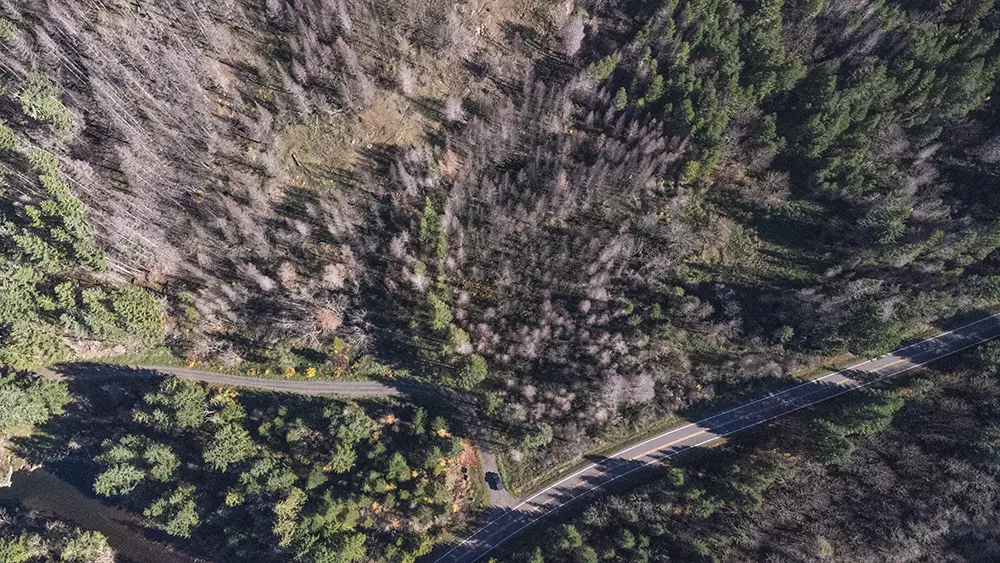
Drone Footage; Burn Area: Arrastra; 11/19/2025
Earlier this month, our team joined partners and community members for a field excursion across several areas affected by the Cottage Grove Complex fire. The purpose of the trip was to see firsthand how the landscape is recovering, to document conditions on the ground, and to better understand what support our watershed will need as restoration work continues.
The group visited multiple burn-affected slopes, riparian corridors, and ridgelines. In each area, we paid close attention to how vegetation is returning, how the soil is holding, and where fire severity is still shaping the recovery process. In many places, we observed encouraging signs: hardwoods beginning to resprout, understory plants pushing through, and patches of green emerging across higher-severity zones. These are early indicators that the forest is working to stabilize itself.
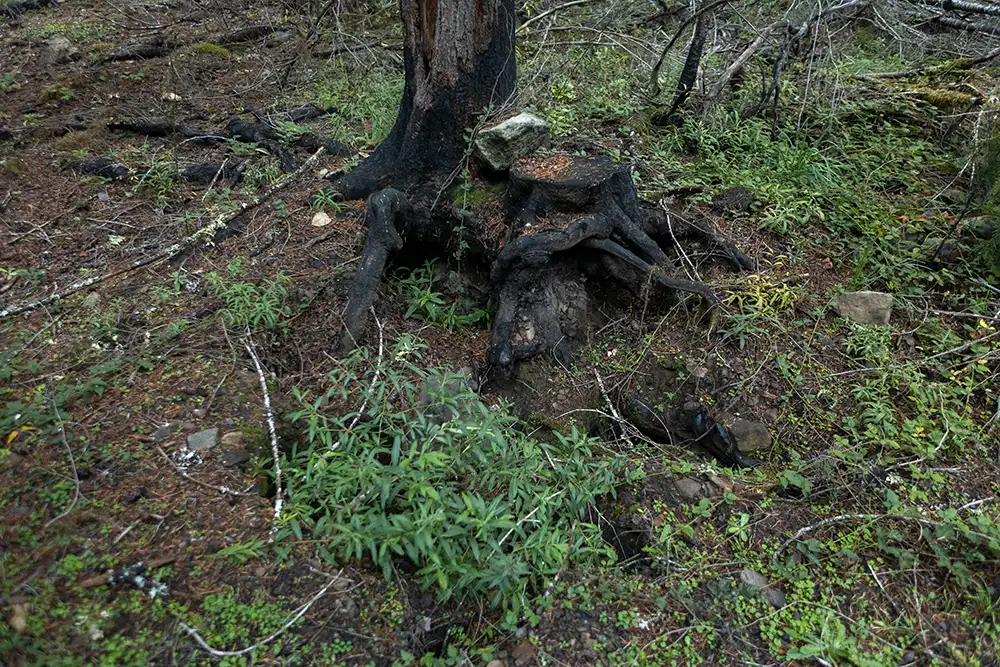
Ground Recovery Footage; Burn Area: Christo Contessa; 11/19/2025
Protecting the watershed remains a central focus of our work. The Row River Valley depends on healthy riparian zones to keep sediment out of waterways, reduce erosion, and protect fish and wildlife habitat. During the excursion, we looked closely at streambanks and nearby slopes to identify where erosion is occurring and where additional monitoring or stabilization may be necessary. Maintaining strong vegetative cover in these areas is essential, not only for water quality, but also for long-term slope stability.
Some slopes showed signs of washing and small rills beginning to form. These are natural responses after a fire, but they also highlight the importance of landscape recovery. Re-establishing ground cover, monitoring rainfall impacts, and supporting natural regeneration all help reduce the risk of larger slides or accelerated erosion as winter storms continue.
This field excursion reinforced how important it is to understand the land up close. The insights gathered will help shape our next steps in the OWEB program, including restoration priorities and community outreach. We are grateful to OWEB’s attention to our watershed, and everyone who joined us in the field and to all who continue to support recovery efforts across the valley. The work ahead remains meaningful, and each visit to the landscape helps us move forward with clarity and care.
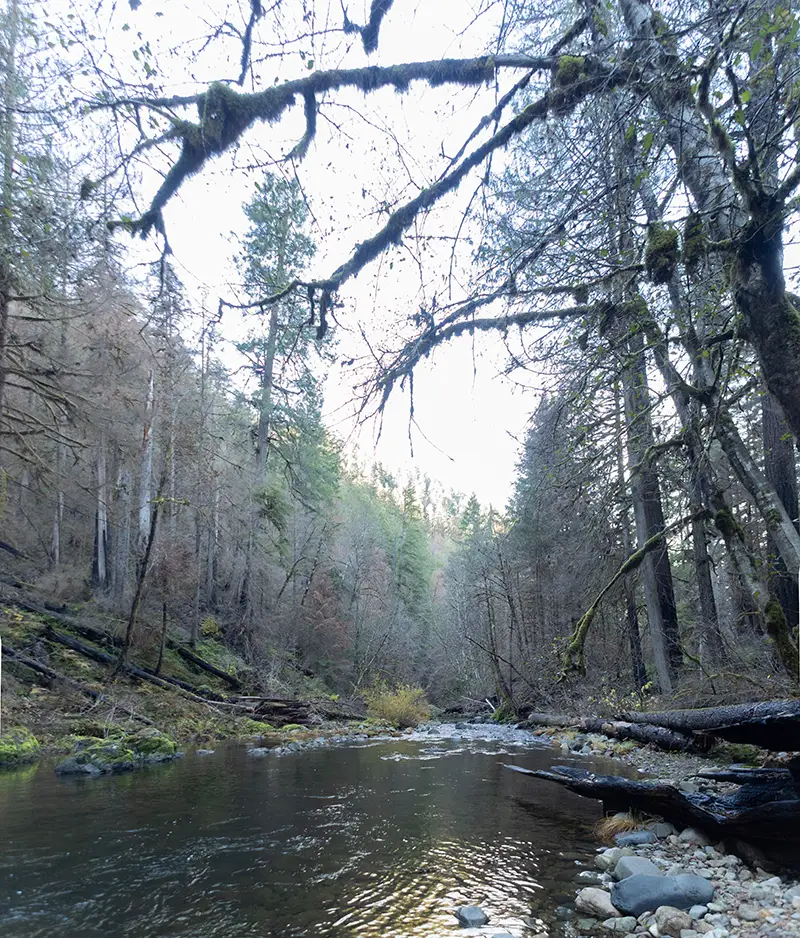
Riparian Footage; Burn Area: Christo Contessa; 11/19/2025