

March 2024: Volunteer Celebrate the Traditional "Push-In" Ceremony. Event accompanied by Representative Charlie Conrad
OUR STORY
Rural communities have always found ways to take care of their own.
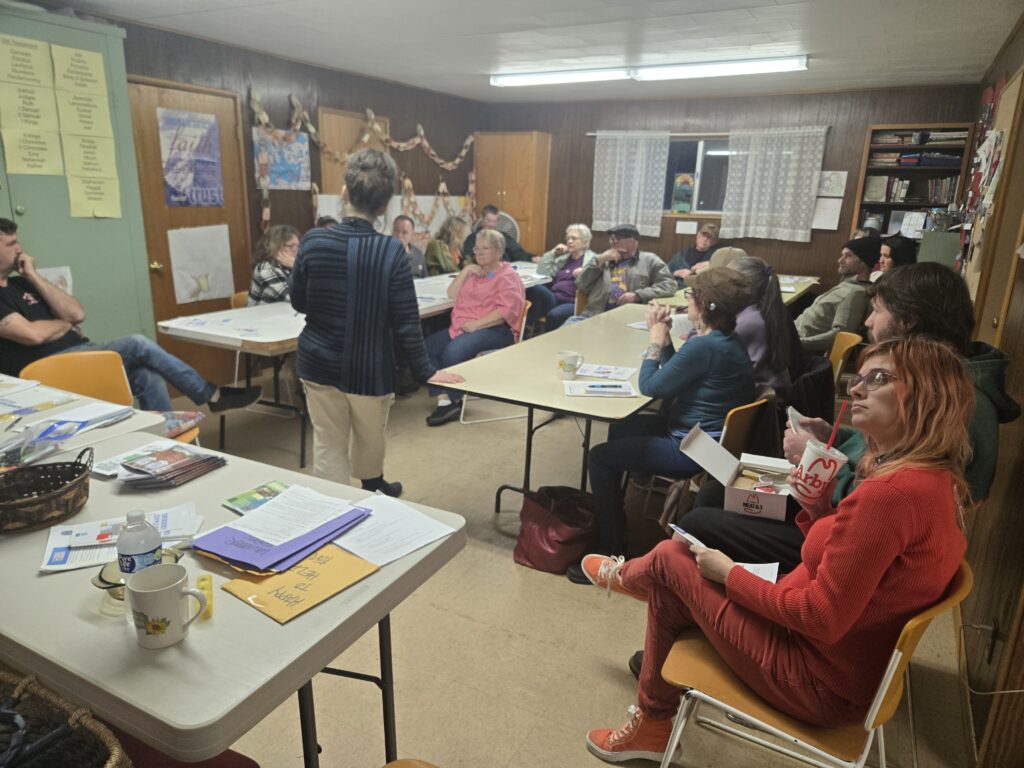
April 2026: Think Tank Tuesday
Across Rural Oregon, distance and limited services are part of everyday life. When something is missing, people often begin by asking what they can do together.
That is how our story began in the Row River Valley.
Our valley stretches for miles through rural Lane County, from the communities around Dorena toward Culp Creek and Disston. About 1,200 people call it home. For many years, residents lived without a local fire district, relying on neighboring emergency services, community fire trailers, and people willing to step forward when help was needed.
Over time, neighbors began asking what it would take to establish dependable fire protection of our own.
It started with fire protection.
The effort that eventually became Row River Valley Community Partnership began with a group of residents exploring how the valley’s community fire trailers might be connected with the 911 system.
A devastating chimney fire in 2022, which destroyed a family’s home near mile marker 18, brought new urgency to those conversations. Residents explored different possibilities for improving fire and medical response, but each led back to the same conclusion: a lasting solution would require an established rural fire protection district.
The Row River Exploratory Committee became Row River Fire Response, a 501(c)(3) nonprofit created to give the community an organization capable of moving that work forward.
What followed took neighbors, volunteers, fire-service professionals, public agencies, community organizations, donors, and countless conversations around tables throughout the valley.
A community builds its own fire district.
Residents organized public meetings, gathered information, worked through the requirements of creating a public district, and built relationships with fire-service professionals, public agencies, and community partners who helped guide the effort.
In May 2024, voters approved formation of the Row River Rural Fire Protection District, creating a permanent, locally governed fire district for the valley.
It was a remarkable accomplishment for a small rural community.
And it taught us something important.
When neighbors have good information, a place to come together, and the right partners at the table, a rural community can build capacity that did not exist before.
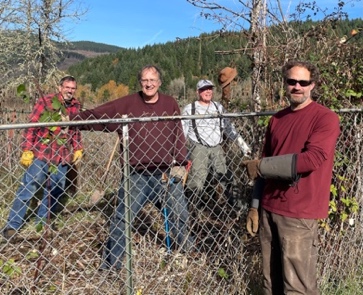
January 2026: Volunteer Mitigation Crew
The work didn’t end with the fire district.
Creating the district solved one problem, but the years spent working throughout the valley had brought other needs into clearer view.
Wildfire preparedness was a growing concern. Severe weather and road closures showed how easily our valley could become isolated. Some neighbors needed help completing work around their homes, while others needed better ways to stay connected. The fire district itself still needed permanent stations and infrastructure.
The relationships built through the fire-district effort gave us a way to keep working together.
Residents were asking about wildfire risk around their homes. Severe weather and road closures raised questions about emergency preparedness and communication. Some neighbors needed physical or financial help completing mitigation work. Older and isolated residents needed better ways to stay connected. Wildfire brought new concerns about forests, waterways, and recovery. The new fire district itself still needed permanent stations and infrastructure.
The relationships built through the fire-district effort gave us a way to begin addressing those needs together.
Row River Fire Response became Row River Valley Community Partnership, reflecting the broader work that had already begun.
From one rural Oregon community.
Today, RRVCP works across six connected areas: communication and engagement, wildfire preparedness and mitigation, emergency preparedness and resilience, community support and rural well-being, watershed and environmental stewardship, and fire and emergency response infrastructure.
The work has grown, but the way we approach it has remained familiar: listen to neighbors, understand the need, find the people who can help, and work together to move it forward.
The Row River Valley is our home and our responsibility. It is also one small part of Rural Oregon.
Our valley isn’t alone in facing these challenges. Rural communities throughout Oregon know what it means to live a long way from services, work with limited resources, prepare for wildfire and other emergencies, and find local answers when there isn’t an organization for every need.
We have learned a great deal here, and we still have plenty to learn. We want to share what has worked for us, learn from other rural communities, and strengthen the relationships that help small communities do more together.
Still neighbors. Still local.
RRVCP has changed considerably since those first conversations about community fire trailers. What has not changed is where the work begins.
It begins with the people who live here.

